Free Sight Word Bingo Cards for Early Readers
Free sight word bingo cards for K-3 classrooms — also called bingo sight words. Pick a Dolch grade-level list (pre-primer, primer, 1st, 2nd, 3rd, nouns) or a Fry frequency band and generate ready-to-play cards in seconds — print a class set or play live on Chromebooks.
Updated
Download free printable sight word bingo cards (PDF)
Kindergarten Dolch Pre-Primer & Primer — 30 unique cards + call sheet. No signup, no watermark. Grade-specific PDFs (1st–3rd, Fry) are below.
Why sight words bingo works for early readers
High-frequency words like "the," "said," and "because" show up constantly in text but don't follow regular phonics patterns — kids just have to recognize them by sight. Bingo turns that recognition practice into a game. Students scan their card looking for a specific word, which builds quick automatic recognition in a low-pressure context. Children who recognize the 220 Dolch words by sight read 50-75% of any K-3 text without sounding out a single letter, so this is one of the highest-leverage early-literacy activities you can run.
Three ways to call sight words bingo
Method 1 — Word recognition: show the word on a card or projector and say it aloud. Students find and mark it. Pure visual recognition practice, closest to actual reading. Method 2 — Word in context: use the word in a sentence and pause before saying it ("The dog ran fast" → find the). Builds comprehension alongside recognition. Method 3 — Definition clues: describe the word ("a one-letter pronoun for yourself" → I; "this word names the color of fire trucks" → red). Adds meaning to recognition. Mixing methods keeps students paying closer attention rather than just pattern-matching to sounds.
Dolch vs Fry — which list should you teach?
Edward Dolch's 1936 list is the older standard — 220 service words plus 95 nouns split across five grade-level sub-lists (pre-primer, primer, 1st, 2nd, 3rd) plus a noun list. It is the one most kindergarten and first-grade teachers reach for, and each grade-level list fits cleanly on a 5×5 bingo card with a few words left over for week-two rotation. Edward Fry's 1957 list (updated 1980) ranks the 1,000 most common words in adult and educational text by frequency. The first 100 are nearly identical to the Dolch primer/1st-grade combination, while the next 800 stretch into upper elementary. Practical rule: self-contained K-2 class → use Dolch. Title I or ELL pull-out spanning grades 1-5 → use Fry; the unified list saves you from maintaining five separate vocabularies.
Why primer words are harder than they look
Dolch primer words include many visually similar pairs that confuse early readers — was/saw (same letters, reversed order), he/she/the/they (all contain "he"), that/what/there/where (share "h" and common patterns), all/am/are/at/ate (five words beginning with "a"). Bingo is particularly useful for these confusable pairs because students must discriminate between similar-looking words quickly — exactly the skill fluent reading requires. Build "confusable pairs" cards with words from a single confusing group only (was/saw/say/said) to drill the discrimination directly.
Classroom variations that work
Whole-class call: 20-25 students, all on printed cards, teacher calls one word every 30 seconds. First to fill a row wins. 12-15 minutes total. The classic format. Center rotation: 4-6 students at a literacy center, one student calls from a list while the others mark, rotate the caller every round, 20-30 minutes for three rounds. ELL pull-out: same words, smaller group, slower pace, teacher calls each word twice (once aloud, once written) — students get spelling reinforcement alongside recognition. Whole-class digital: every student opens the BingWow play link on a Chromebook, each gets their own randomized board (no two are alike), teacher calls words from the front, first row to complete triggers a confetti animation on the projector.
Printing vs. playing live
Print when (a) introducing a new word list and wanting every student to take a card home for parent-supported review, or (b) Chromebooks are unavailable. BingWow generates up to 500 unique 5×5 cards in a single PDF — every card has a different random arrangement of the same words, so adjacent students cannot copy each other's marks. Play live for centers, fast-finish enrichment, and any scenario where you want zero prep and zero paper waste — open the play link on every Chromebook, call words from the front, mistakes correct themselves with nothing to erase.
Tracking mastery between bingo sessions
Keep a class checklist: the 40 (pre-primer) or 52 (primer) or 41 (1st grade) words across the top, student names down the side. After each bingo session, do a quick 1-minute individual check on the 5-6 words you called most. Mark each student as mastered (instant recognition under 1 second) or still developing. A student is ready to advance to the next Dolch list when they recognize 90%+ of the current list instantly on a cold read — do not wait for 100% mastery before moving on. Pre-primer mastery by end of kindergarten, primer + 1st grade by mid-1st, 2nd grade by mid-2nd, 3rd grade by mid-3rd is a strong progression.
Fluency connection
Sight word automaticity means recognizing a word instantly within connected text — not just in isolation. After a bingo session, show students a simple passage and time their reading. Repeat monthly. Students who achieve automaticity on primer words typically read 60-80 words per minute by end of kindergarten, which is a strong predictor of 1st grade reading success. Once students know the words well, bingo can also reinforce meaning and usage — call a sentence with the sight word missing ("I _____ went to school") and have students find the word that completes it. These variations add a comprehension layer on top of recognition.
How to build a card for your exact class list
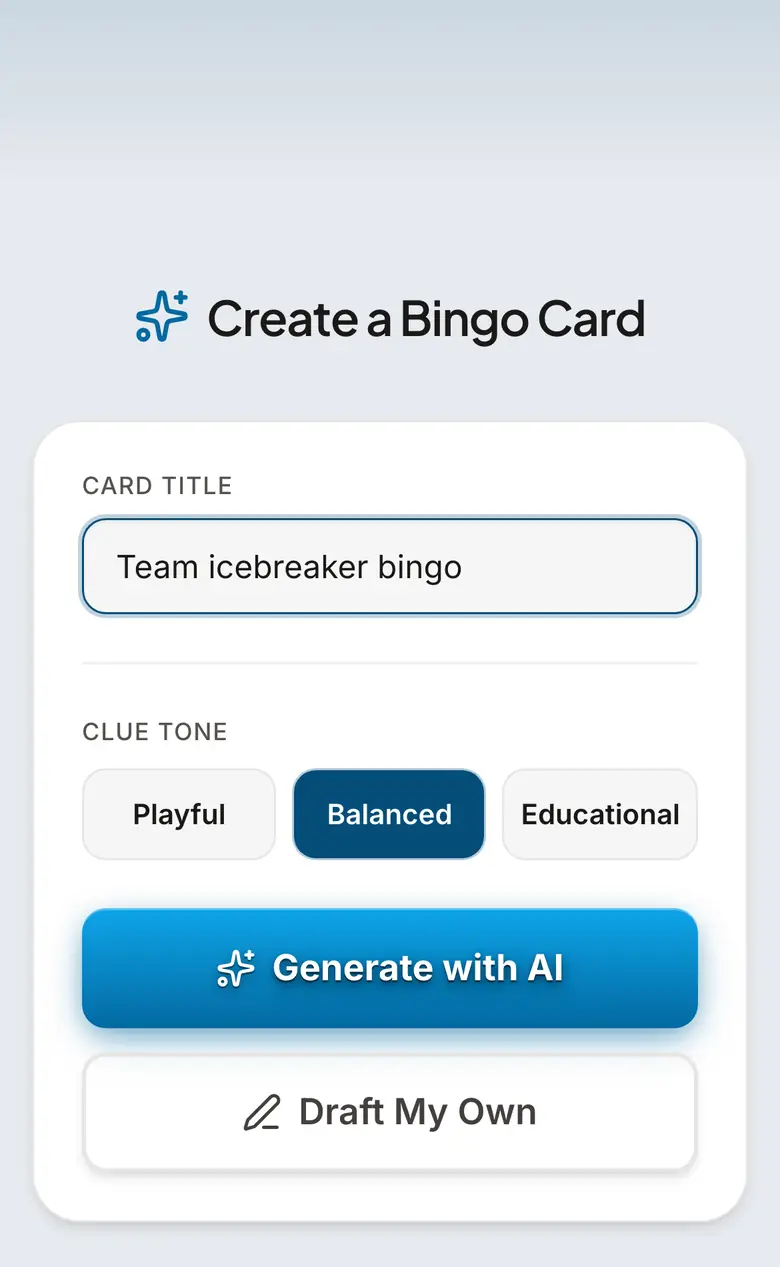
Pick the list section below that matches what you are teaching, click "Generate a Free Bingo Card," and BingWow builds the card in about 10 seconds. From the play view you can print up to 500 unique copies (each with a different random arrangement of the same words), share a multiplayer link with students on Chromebooks, or save the card for next week. No subscription, no login, no ads. To use your district's adopted list or your reading unit's specific words instead, type or paste them directly at bingwow.com/create — the generator accepts any 24-word prompt.
Word Lists with One-Click Card Generation
Dolch Pre-Primer (40 words)
The starting point for sight word instruction — the 40 most common words in children's reading material. Should be mastered by end of kindergarten.
- a
- and
- away
- big
- blue
- can
- come
- down
- find
- for
- funny
- go
- help
- here
- I
- in
- is
- it
- jump
- little
- look
- make
- me
- my
- not
- one
- play
- red
- run
- said
- see
- the
- three
- to
- two
- up
- we
- where
- yellow
- you
Sequence weeks 1-2 with the/a/and/I/to/in/is/it/of/you, weeks 3-4 with can/go/we/me/my/see/said/look/come/here, then build from there.
Dolch Primer (52 words)
The bridge from beginning reading to independent reading — 52 high-frequency function words and early content words. Mastered by end of K or early 1st grade.
- all
- am
- are
- at
- ate
- be
- black
- brown
- but
- came
- did
- do
- eat
- four
- get
- good
- have
- he
- into
- like
- must
- new
- no
- now
- on
- our
- out
- please
- pretty
- ran
- ride
- saw
- say
- she
- so
- soon
- that
- there
- they
- this
- too
- under
- want
- was
- well
- went
- what
- white
- who
- will
- with
- yes
Watch for confusable pairs: was/saw, he/she/the/they, that/what/there/where. Build a "confusable pairs only" card to drill the discrimination directly.
Dolch 1st Grade (41 words)
The words that unlock chapter books and independent reading. Most first graders should recognize the full list by mid-year on a cold read.
- after
- again
- an
- any
- ask
- as
- by
- could
- every
- fly
- from
- give
- going
- had
- has
- her
- him
- his
- how
- just
- know
- let
- live
- may
- of
- old
- once
- open
- over
- put
- round
- some
- stop
- take
- thank
- them
- then
- think
- walk
- were
- when
Advance students to Dolch 2nd grade when they recognize 90%+ of this list instantly (under 2 seconds per word on a cold read).
Dolch 2nd Grade (46 words)
Second-grade sight vocabulary — longer words, more contractions, and the first irregular past-tense forms (gave, made, found).
- always
- around
- because
- been
- before
- best
- both
- buy
- call
- cold
- does
- don't
- fast
- first
- five
- found
- gave
- goes
- green
- its
- made
- many
- off
- or
- pull
- read
- right
- sing
- sit
- sleep
- tell
- their
- these
- those
- upon
- us
- use
- very
- wash
- which
- why
- wish
- work
- would
- write
- your
Pair with the Dolch noun list to build cards mixing function words and content words for richer sentence-completion variations.
Dolch 3rd Grade (41 words)
The capstone Dolch list — the final 41 high-frequency words students need before transitioning to vocabulary-by-topic instruction.
- about
- better
- bring
- carry
- clean
- cut
- done
- draw
- drink
- eight
- fall
- far
- full
- got
- grow
- hold
- hot
- hurt
- if
- keep
- kind
- laugh
- light
- long
- much
- myself
- never
- only
- own
- pick
- seven
- shall
- show
- six
- small
- start
- ten
- today
- together
- try
- warm
Students who master all five Dolch lists (Pre-Primer through 3rd) recognize roughly half the words in any K-3 text without decoding.
Dolch Nouns (95 words)
The 95 most common content nouns in K-3 reading — animals, family, household objects, time, colors. Pair with any function-word list.
- apple
- baby
- back
- ball
- bear
- bed
- bell
- bird
- birthday
- boat
- box
- boy
- bread
- brother
- cake
- car
- cat
- chair
- chicken
- children
- Christmas
- coat
- corn
- cow
- day
- dog
- doll
- door
- duck
- egg
- eye
- farm
- farmer
- father
- feet
- fire
- fish
- floor
- flower
- game
- garden
- girl
- goodbye
- grass
- ground
- hand
- head
- hill
- home
- horse
- house
- kitty
- leg
- letter
- man
- men
- milk
- money
- morning
- mother
- name
- nest
- night
- paper
- party
- picture
- pig
- rabbit
- rain
- ring
- robin
- Santa Claus
- school
- seed
- sheep
- shoe
- sister
- snow
- song
- squirrel
- stick
- street
- sun
- table
- thing
- time
- top
- toy
- tree
- watch
- water
- way
- wind
- window
- wood
Best used as a mix-in with a grade-level function-word list rather than on its own — pairing function and content words mirrors how real text reads.
Fry 1-100
The 100 most frequent words in adult and educational English. Roughly equivalent to Dolch primer + Dolch 1st grade combined.
- the
- of
- and
- a
- to
- in
- is
- you
- that
- it
- he
- was
- for
- on
- are
- as
- with
- his
- they
- I
- at
- be
- this
- have
- from
- or
- one
- had
- by
- word
- but
- not
- what
- all
- were
- we
- when
- your
- can
- said
- there
- use
- an
- each
- which
- she
- do
- how
- their
- if
- will
- up
- other
- about
- out
- many
- then
- them
- these
- so
- some
- her
- would
- make
- like
- him
- into
- time
- has
- look
- two
- more
- write
- go
- see
- number
- no
- way
- could
- people
- my
- than
- first
- water
- been
- call
- who
- oil
- its
- now
- find
- long
- down
- day
- did
- get
- come
- made
- may
- part
The Fry first-100 covers approximately half of all words in printed text — a kindergarten or 1st grader who masters this list reads about 50% of any age-appropriate book without decoding.
Fry 101-200
Words 101-200 of the Fry frequency list — overlaps about 70% with the Dolch 2nd grade list. Strong fit for late 1st through 2nd grade.
- over
- new
- sound
- take
- only
- little
- work
- know
- place
- year
- live
- me
- back
- give
- most
- very
- after
- thing
- our
- just
- name
- good
- sentence
- man
- think
- say
- great
- where
- help
- through
- much
- before
- line
- right
- too
- mean
- old
- any
- same
- tell
- boy
- follow
- came
- want
- show
- also
- around
- form
- three
- small
- set
- put
- end
- does
- another
- well
- large
- must
- big
- even
- such
- because
- turn
- here
- why
- ask
- went
- men
- read
- need
- land
- different
- home
- us
- move
- try
- kind
- hand
- picture
- again
- change
- off
- play
- spell
- air
- away
- animal
- house
- point
- page
- letter
- mother
- answer
- found
- study
- still
- learn
- should
- America
- world
High-value mix-in words for late 1st and 2nd grade: over, new, sound, take, only, work, know, place, live, give, most, very, after, just, name, good, think, great, where, help.
Ready-Made Cards
Frequently Asked Questions
Where can I download free sight word bingo cards as a PDF?
Is there a free sight word bingo kindergarten printable?
Is there a sight word bingo generator?
What is sight word bingo level 2?
What are sight word bingo cards?
What bingo sight words should I use?
Where can I download free sight word bingo printables?
How do I play sight word bingo in kindergarten?
What's the difference between Dolch and Fry sight words?
How many sight word bingo cards can I print?
Can I make sight word bingo for 1st grade, 2nd grade, or 3rd grade?
Does sight word bingo work for ESL students?
How long should a sight word bingo game last?
Can students play sight word bingo on Chromebooks?
Can I customize the cards with my class's specific weekly list?
How do I call words for sight word bingo without a caller list?
Related Guides
ESL Bingo
ESL bingo turns vocabulary review into something students actually want to do. Ready-made cards for common vocab units, or build your own with the card creator.
Kids Bingo Cards — Games for Children of All Ages
Free bingo cards designed for kids — animals, colors, shapes, sight words, math facts, and dozens more topics. Play on a phone or tablet, or print unique cards for a classroom party, birthday, or rainy day at home. Every card is age-appropriate, ad-free, and ready in seconds.
Blank Bingo Card Templates
Download blank bingo card templates in 3×3, 4×4, and 5×5 grids. Fill them in by hand, or jump into the card creator and type your own clues for a fully shuffled set.
Tips & Articles
Best Classroom Bingo Resources for Teachers (2026)
A curated guide to the best classroom bingo resources, tools, and teaching strategies from top education blogs in 2026 Free on BingWow.
The Educator's Guide to Bingo in the Classroom
Research-backed strategies for using bingo across K-12 subjects. Covers 10 peer-reviewed studies, activities for math, ELA, science, history, and...